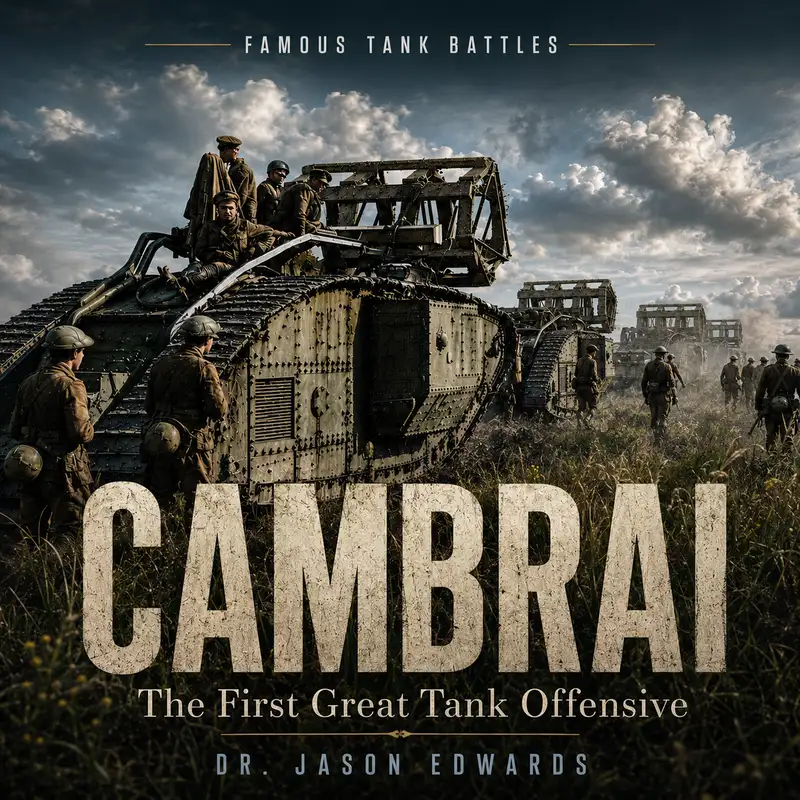
Cambrai: Episode 24 — Draw, Legend, and the Future of Armor
Cambrai ended without the decisive strategic victory the British had hoped for, but it still became one of the most influential battles in the history of armored warfare. This final episode looks at the complicated aftermath of the campaign, including the inquiry, the arguments over blame, the political controversy, and the gap between the dramatic opening of the battle and its far more ambiguous final result. The British had not taken Cambrai, had not shattered the German front permanently, and had seen much of their early success reduced by later fighting and counterattack. In that sense, the battle ended close to a draw.
But military history is not shaped only by final maps. Cambrai mattered because it changed how armies thought about tanks, surprise, artillery coordination, and combined-arms warfare. It proved that the trench deadlock could be broken under the right conditions, even if that breakthrough could not yet be fully exploited or easily sustained. The battle also exposed every major problem early armored warfare still had to solve: communications, logistics, mechanical endurance, battlefield control, and the challenge of protecting a salient after success. Those lessons would echo into the campaigns of 1918 and far beyond.
This closing chapter explains why Cambrai became both legend and warning at the same time. It was not a clean victory, but it was a genuine turning point, because the future of armored warfare became visible there in unfinished form. The battle’s memory survived not because it settled every question, but because it raised the right ones so clearly. For more military history writing and books, visit MilitaryAuthor.me, and for magazines, galleries, and a massive archive of military photos and video, visit Trackpads.com.